Every De-Extinct player runs into the same wall: resources do not come fast enough, and every choice about where to spend them feels permanent. Gold disappears into upgrades. Food vanishes into training. Fossils pile up with no clear plan. If you have been playing for more than a week, you already know this feeling.
This guide is not about grinding more. It is about spending smarter. Based on what experienced players have learned through trial and error, here is how to manage your resources effectively — whether you spend money or play completely free.
—
## The Core Problem with Resource Management in De-Extinct
Most players do not have a resource shortage — they have a priority problem. They earn enough to make progress, but they spread it too thin across too many dinosaurs, too many buildings, and too many upgrades that do not move the needle.
The fix is not to play more. It is to make one decision at a time: *what is holding my account back right now, and what is the single best use of my next resource batch?*
Answer that question correctly, and your account grows significantly faster even with the same resource income.
—
## Resource Categories in De-Extinct
Before planning, understand what you are working with. Resources in De-Extinct fall into several categories:
**Consumable Resources**
These are spent and gone: gold, food, speedup items, and various event currencies. They are the most flexible resources and also the easiest to waste. Every consumable you spend should have a specific, immediate purpose — not a vague “I will use it eventually.”
**Persistent Investments**
These are dinosaurs, buildings, and equipment that you level up over time. Once invested, they compound. A dinosaur at 5 stars is worth more than five dinosaurs at 1 star. Consolidating investment into persistent investments almost always outperforms spreading resources thin.
**Event Resources**
Limited-time currencies and items that expire if not used. Event resources should be treated as time-sensitive budgets — plan what to spend them on before the event starts, not after.
—
## What to Farm First
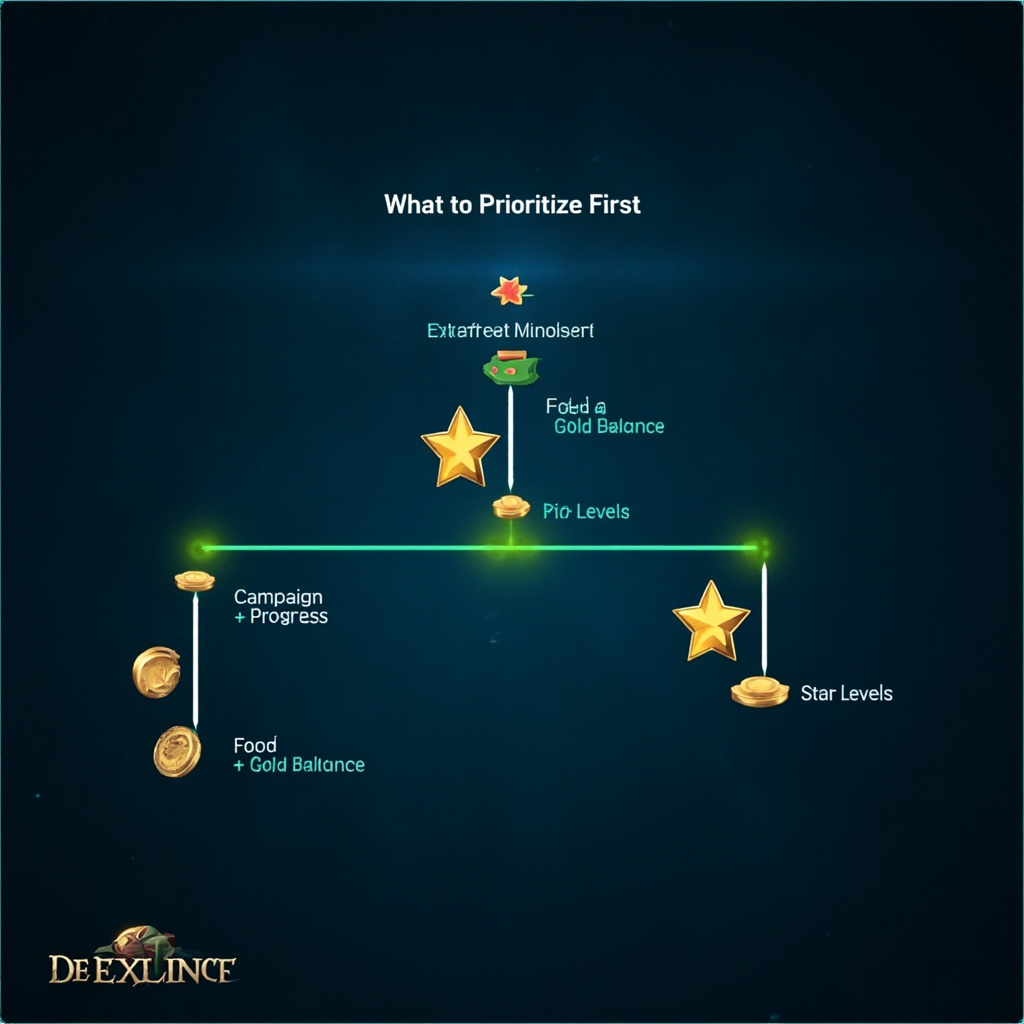
Prioritization is the most important skill in De-Extinct. Here is the decision hierarchy most experienced players follow:
**1. Campaign Progress First**
Campaign mode is your primary source of long-term resource income. Unlocking higher campaign stages unlocks better resource returns, which compounds over time. Every decision that accelerates your campaign progress is worth prioritizing over almost anything else.
**2. Food and Gold Balance**
These two resources trade off against each other constantly. Training dinosaurs costs food. Upgrading buildings costs gold. When you are low on one, your progress stalls. Track which resource is your current bottleneck and address it specifically rather than grinding the other one blindly.
**3. Dinosaur Stars Before Level**
A 3-star dinosaur at level 30 outperforms a 1-star dinosaur at level 50 in almost every scenario. Star levels are permanent power increases. Level is temporary. Always prioritize star upgrades over raw level grinding.
For concrete upgrade priorities, see our Equipment Guide which covers what to upgrade and when.
—
## New Player Priorities (First 30 Days)
If you are in the first month of playing, your decisions are simplified by your limited options. Focus on these:
**Week 1: Establish a Core Team**
Pick your best 3 to 5 dinosaurs — whatever you have that can survive the early campaign — and commit resources to them. Do not reroll your roster chasing something better. Build with what you have.
**Week 2: Push Campaign as Far as Possible**
Every new campaign stage you unlock is a permanent increase in your daily resource income. Events and dailies become easier, and you get access to better resource nodes. Campaign progress is the single biggest lever for account growth.
**Week 3: Start Structuring Your Dinosaur Investments**
By week 3, you have enough data to know which of your dinosaurs are performing. Cut your weakest investments and consolidate resources into your top performers. If you pulled a rare dinosaur in the first weeks, this is when you decide whether to commit to it.
**Week 4: Begin Event Participation**
Events offer the best return on investment in the game. Even as a new player, you can participate meaningfully in events with a focused roster. Plan your resource spending around event schedules.
For a complete new player roadmap, read our Beginner Guide.
—
## Free to Play Resource Strategy
F2P players have the same resource management challenges as paying players, just with less margin for error. The good news: almost everything in De-Extinct is achievable without spending. You just have to be more deliberate.
**Daily Resource Priorities for F2P**
Every day, before doing anything else, complete the activities that give the best return per unit of effort:
– **Daily quests** — Always finish. They are a predictable source of resources for a fixed time investment.
– **Campaign runs** — Run the highest campaign stage you can clear consistently. This is your primary sustainable income source.
– **Event participation** — Even if you cannot clear the top tier, participate at whatever level you can. Partial rewards add up.
**What Not to Spend On**
F2P players should never spend resources on:
– Rerolls or roster reshuffling from paid packs
– Building up dinosaurs that do not serve your current campaign stage
– Speedups on upgrades that do not directly unlock new content
**The 80/20 Rule for F2P**
80% of your resources should go to your core team. The remaining 20% goes to exploration — trying new dinosaurs, testing new formations, or preparing for the next campaign stage. When you hit a wall, it is almost always because resources are spread too thin, not because you need a different dinosaur.
Our Free to Play Guide has a full weekly schedule for F2P account building.
—
## Resource Acquisition Timeline
Understanding *when* to prioritize what resource helps you plan ahead:
**Early Game (Days 1-14)**
Focus: Gold and food. Your account is new, and both will be in short supply. Do not worry about fossils or event currencies yet.
**Mid Game (Days 14-45)**
Focus: Star-level upgrades and fossil accumulation. You have a stable resource flow, and the biggest power gains come from pushing star levels on your core team. Fossils start mattering more for long-term roster depth.
**Late Game (Day 45+)**
Focus: Efficiency optimization and event maximization. Your core team is established. Now the difference between good players and great players is how they use event windows and resource return multipliers.
—
## Upgrade Priority Order
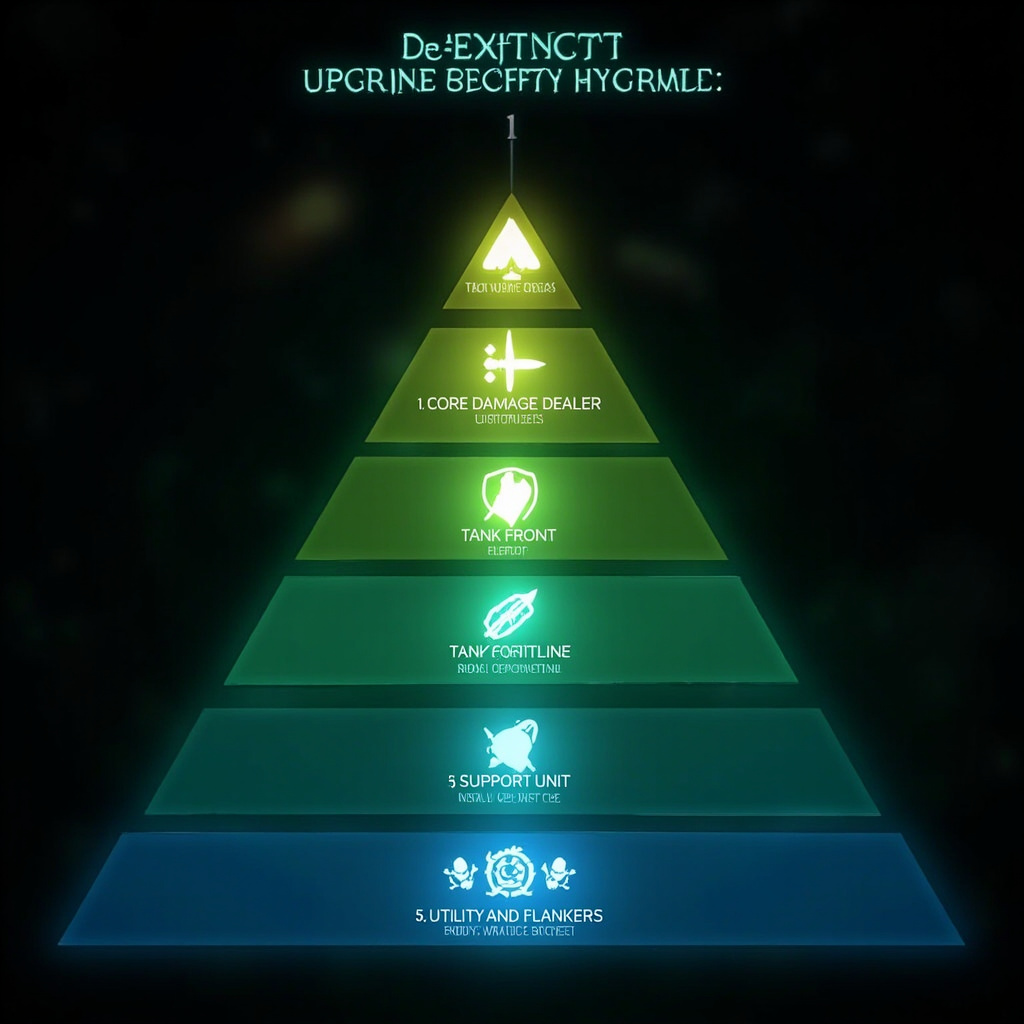
If you are unsure what to upgrade next, follow this general order:
1. **Core damage dealer** — Your primary source of campaign and event damage output
2. **Tank or frontline** — Keeps your damage dealer alive long enough to finish fights
3. **Support unit** — Multiplies the effectiveness of your damage and tank
4. **Secondary damage dealer** — For content that requires two damage dealers
5. **Utility and flankers** — For specific modes or counters
Never upgrade a lower-priority option before a higher-priority one is maxed for your current content level. When your current content becomes easy, move down the list.
—
## Common Resource Mistakes to Avoid
**Mistake 1: Spreading Stars Too Thin**
Getting five dinosaurs to 3 stars feels like progress. It is not. A single 5-star dinosaur carries harder than five 3-star dinosaurs combined. Consolidate.
**Mistake 2: Hoarding Resources Forever**
Some players save resources waiting for the “perfect” moment to spend. Resources sitting idle are wasted potential. If you have enough to meaningfully push one upgrade, spend it.
**Mistake 3: Upgrading Buildings You Do Not Need**
Building upgrades have diminishing returns. Only upgrade buildings that directly enable your next campaign stage or unlock new content. Decorative or comfort upgrades should come last.
**Mistake 4: Ignoring Events**
Events offer some of the best resource returns in the game. Even if you cannot win the top tier, clearing a lower tier consistently is better than skipping events entirely.
—
## FAQ — Resource Management
**How do I get resources faster in De-Extinct?**
The fastest sustainable source is campaign progress — higher stages unlock better resource nodes and daily returns. Beyond that, prioritize daily quests and events. There is no secret shortcut: consistent play with focused spending beats grinding randomly every time.
**Should I save resources for special events?**
Yes. Most events offer better returns if you go in with a stockpile. Plan your spending around event calendars rather than spending everything as soon as you have it.
**What should I prioritize as a new player?**
Your core team of 3 to 5 dinosaurs, in that order: damage dealer, tank, support. Do not try to build a full roster in the first month. A focused account with a strong core team grows faster than a scattered account with many half-upgraded dinosaurs.
**How do I know if I am spending resources correctly?**
The clearest signal is whether you are progressing through campaign stages consistently. If you have been stuck on the same campaign stage for more than two weeks with no progress, your resource allocation is wrong. Audit where you are spending and consolidate.
—
**Which dinosaurs are worth your resources?**
The tier list matters here — investing stars in a low-tier dinosaur wastes everything. See our Dinosaur Tier List and Equipment Guide for the community-rated upgrade path that gives you the best ROI on every resource.
## Start Playing De-Extinct
Ready to put these resource principles into action? Download De-Extinct and start building your account with a smarter approach:
Play smart, spend focused, and your account will compound faster than you expect.
—
This guide reflects community player experience with De-Extinct resource management. Specific values and recommendations are based on player-observed gameplay as of July 2026. Game updates may change optimal strategies.
Ready to Start Playing?
Download De-Extinct free on Android or iOS and join thousands of players today.